Request a Quote

GET A FREE QUOTE FOR
CUSTOM DIRECTIONAL SIGNAGE

Let's Talk About Your Project. Get In Touch With Triad Signs Now.

Name(Required)
MM slash DD slash YYYY
UPLOAD PDF DOCUMENTS
MAX: 500MB
Drop files here or
Accepted file types: pdf, Max. file size: 500 MB.
    Privacy is important to us. We will not share your information with any third parties.

    Clear Directions That Make Every Move The Right One

    Find out how wayfinding signs can help visitors or staff arrive and stay confidently.

    How Navigational Sign Systems Impact Revenue And Reputation

    Clearer Paths, Better Experiences, And Stronger Results

    A missed appointment, a late arrival, or a lost customer can often be caused by poor signage. In complex environments like medical parks, school campuses, office buildings, or retail centers, confusion creates frustration. Consequently, frustration damages credibility. When a visitor turns around in the hallway or stops at the front desk to ask for direction, time, revenue, and goodwill slip away. In healthcare, that moment can mean delayed care. In retail, it’s a missed sale. In corporate or education settings, it disrupts operations.

    Professionally designed wayfinding systems eliminate all of these troubles. Triad Signs helps businesses across all industries guide people naturally from arrival to destination with signage that blends clarity, function, and brand identity. The team can identify pressure points like bottlenecking parking lots, overwhelmed lobbies, or hard-to-find suites to create directional signs that answer questions before they’re asked. Clear signage results in faster check-ins, fewer interruptions, more completed visits, and a smoother experience for everyone.

    Back By Expertise From Site Walk To Installation

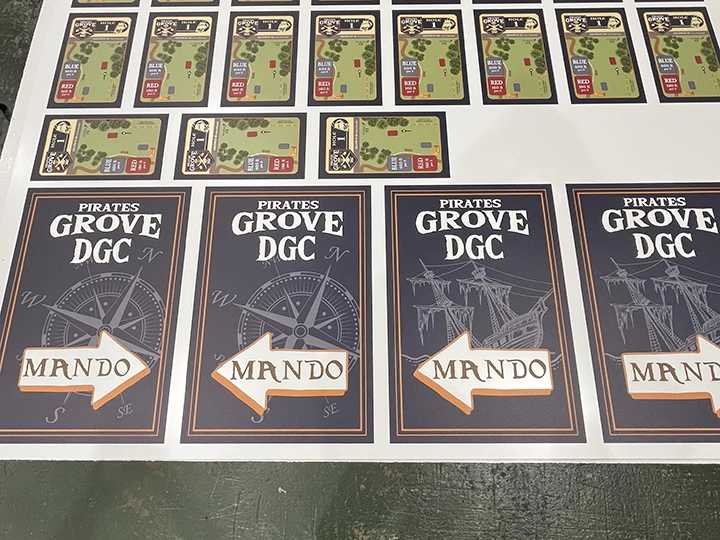
    Strong directional signage starts with strategy. Site surveys, traffic pattern analysis, and environmental condition reviews identify where signs need to be placed and what they need to say. Sign design then turns those insights into a cohesive system using clear hierarchies, intuitive typography, and durable materials that match the environment.

    Color-calibrated print production ensures brand consistency across materials. Installation crews align each piece to code, wall structure, and visitor flow—delivering a finished system that works from day one. Plus, ongoing sign services keep everything updated as floor plans or tenants change.

    When directional signs reflect brand colors, logos, and tone, they don’t feel like an add-on. They become an extension of the experience. From room ID signs and directories to wall-mounted arrows and elevator placards, sign graphics remain consistent and professional across every touchpoint.

    Functional Sign Graphics Meet Brand Voice At Every Turn

    Triad Signs designs systems to adapt as spaces grow. Modular room IDs, changeable panels, and scalable directories allow signage to evolve with minimal disruption. For multi-tenant environments, it’s a long-term strategy that protects investment and keeps navigational cues looking cohesive.

    This branded cohesion matters most in complex, multi-audience environments like museums, hospitals, government buildings, and mixed-use campuses. A unified sign system creates trust and makes every location feel intentional.

    Clear directional signs protect customer satisfaction, brand image, and operational flow. When people arrive and find exactly what they’re looking for, the message is unmistakable: this business is organized, thoughtful, and professional.

    The visitor and staff experience begins well before the front door. Outdoor directional signs create immediate clarity, guiding drivers and pedestrians with cues that reduce hesitation and set a confident tone. From the curb to the lobby, every touchpoint is an opportunity to reinforce civility and build trust.

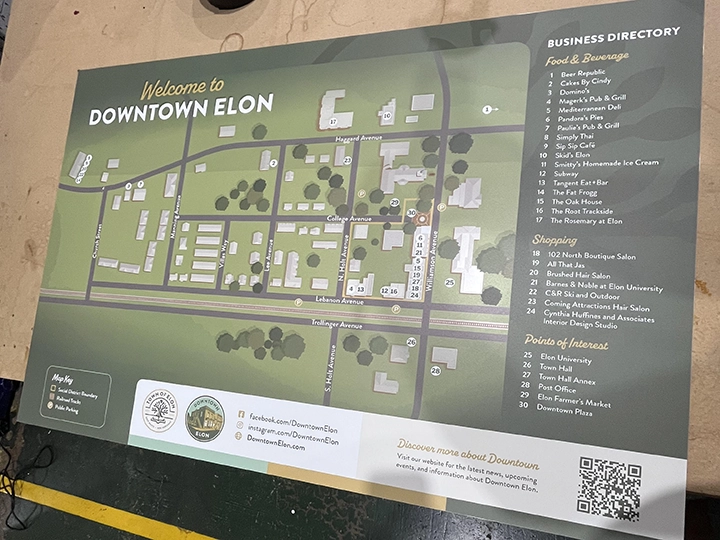
    Parking totems, post-and-panel markers, and building-mounted arrows help orient first-time visitors the moment they arrive. For retail centers, office parks, hospitals, or educational campuses, these early cues eliminate confusion, reduce traffic flow issues, and prevent missed turns. Monument-integrated maps and illuminated signage establish both identity and order from a distance. This is especially important at multi-tenant or high-traffic sites.

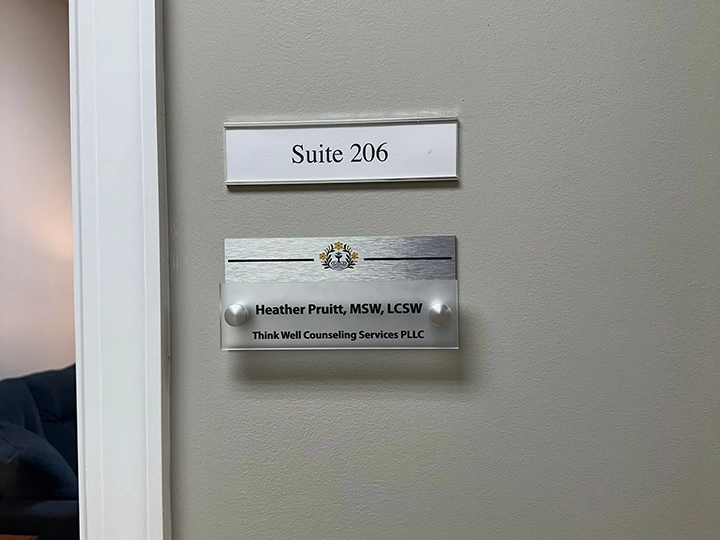
    Inside, directional signs continue to reduce friction. In public zones, high-contrast overhead blades and wall indicators provide fast wayfinding at a glance. In office corridors, clean room ID signs, suite numbers, and glass privacy bands marked with icons organize the space while maintaining visual appeal. For healthcare, industrial, and manufacturing settings, durable sign materials with safety symbols, compliant exit plans, and tamper-resistant installation protect both people and operations.

    Every space has its own set of navigational challenges. Medical centers use color-coded wings and floor-specific directories to ease patient stress and reduce delays. Schools and universities benefit from adaptable building maps and directional signs that shift with class schedules and events. In manufacturing and logistics, durable signage helps route visitors safely, mark zones, and manage deliveries without disrupting operations.

    Retail centers drive higher foot traffic and revenue when shoppers can navigate without friction. Museums, arenas, and hotels rely on signage that blends brand tone with functionality—directing visitors to exhibits, concessions, and check-in without slowing them down. Multi-tenant offices and civic buildings improve public perception and efficiency through standardized lobby directories, suite signage, and departmental consistency.

    Digital message centers and modular sign systems help these properties keep pace with change. From updated tenant listings and real-time campus alerts to post-renovation suite adjustments, flexible directory components ensure clarity without a full redesign. Interactive displays reduce front desk interruptions, and magnetic or slide-in panels make maintenance fast and cost-effective.

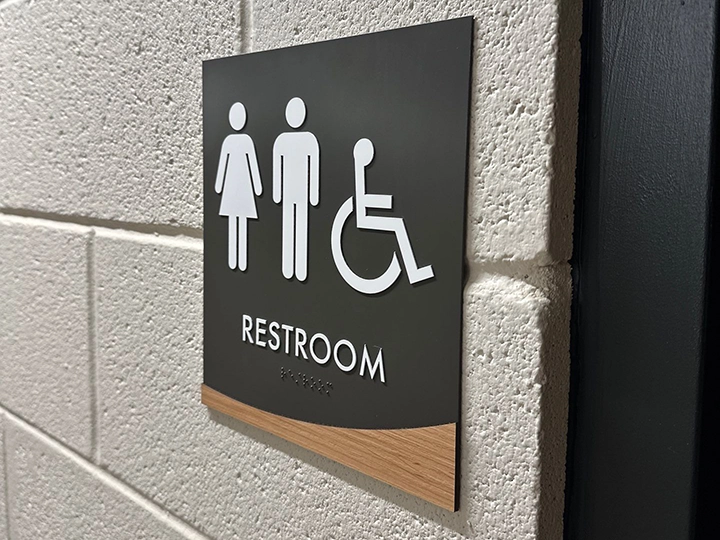
    In regulated spaces like hospitals, municipal buildings, and campuses, wayfinding signs must guide while meeting strict codes for accessibility and life safety. ADA-compliant signage, including tactile room IDs, Braille integration, and high-contrast graphics, makes certain that every visitor can navigate independently while meeting inspection standards.

    Accounting for mounting heights, visibility, evacuation maps, stair identifiers, and regulatory notices, Triad Signs plans compliance into every project from the start. This proactive approach minimizes rework, speeds approval, and creates a signage system that aligns with both local code and brand identity. Fonts, finishes, and materials stay consistent across the environment, giving visitors a seamless and accessible experience from the parking lot to the top floor.

    Directional signage is meant for navagation, but it’s also a lasting representation of a brand. Material choices, fabrication precision, and finish quality all contribute to how a space feels and functions over time.

    Triad Signs uses materials built for longevity like aluminum composites for corrosion resistance, photopolymer and acrylic for tactile clarity, and sealed, powder-coated frames for exterior use. Insert-ready frames offer flexibility for updates, making them ideal for multi-tenant properties. From high-touch interior signs to outdoor wayfinding systems, every element is engineered to endure, maintain brand visibility, and reduce long-term maintenance.

    Chat With Us